
Heat Exhaustion vs. Heat Stroke: Know the Difference Before You Need To
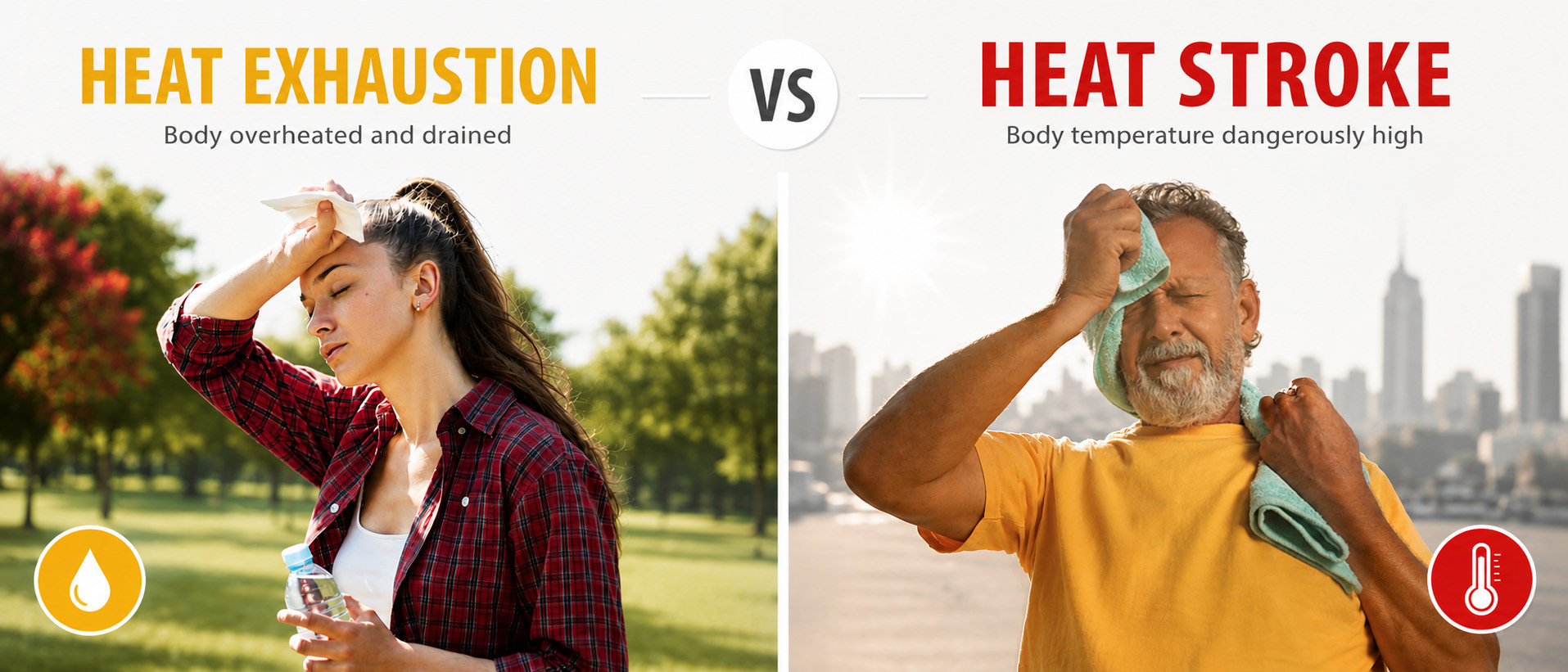
Every summer, the same headlines show up: a hiker collapses on a trail, a construction worker is rushed to the ER, a grandparent is found disoriented in a house with no air conditioning. Most of us know that heat is dangerous in some vague sense. Fewer of us know exactly when "I feel awful" tips over into "this is a medical emergency."
That distinction matters, because heat exhaustion and heat stroke aren't just two points on the same scale of discomfort. One is your body sending up a flare. The other is your body's cooling system shutting down entirely. Confusing the two or worse, treating a heat stroke like it's just a bad case of overheating can cost someone their life.
Heat Exhaustion: Your Body's Warning Shot
Heat exhaustion shows up when you've been sweating hard for a while, usually after hours in the sun, a long workout, or physical labor in humid conditions, and your body starts running low on water and electrolytes. It's uncomfortable and it's your cue to stop, but on its own it's not yet an emergency. You'll typically notice:
• Heavy, drenching sweat
• Skin that feels cool, pale, or clammy, almost the opposite of what you'd expect
• Cramping muscles
• A wave of weakness or fatigue
• Dizziness
• A pounding headache
• Queasiness, sometimes vomiting
• A pulse that's quick but feels thin or weak
• Occasionally, fainting
Left unchecked, this is the stage right before things get serious.
Heat Stroke: When the Body Stops Cooling Itself
Heat stroke is what happens when that warning gets ignored, or comes on so fast there's no time to react. Core temperature climbs past roughly 104°F (40°C), and the body simply loses its ability to bring itself back down. This is no longer something you wait out — it's an emergency that can damage the brain, heart, and kidneys within a short window.
Watch for:
• A body that feels dangerously hot to the touch
• Skin that's flushed and hot, sometimes dry, sometimes still sweaty, which throws people off
• Confusion, agitation, or behavior that seems "off"
• Slurred or difficult speech
• A severe, sudden headache
• A pulse that's both fast and strong
• Loss of consciousness
• In severe cases, seizures
If someone shows these signs, don't wait to see if it passes. Call for emergency help right away.
| Feature | Heat Exhaustion | Heat Stroke |
| Body temperature | Usually under 104°F (40°C) | Usually over 104°F (40°C) |
| Skin | Sweaty, cool, pale | Hot — dry or sweaty |
| Mental state | Tired, dizzy, weak | Confused, disoriented, possibly unconscious |
| How serious | Concerning, but manageable | Life-threatening |
| What helps | Cooling down, fluids, rest | Emergency medical care, immediately |
If It's Heat Exhaustion
There's a decent amount you can do on the spot:
1. Get the person into shade or somewhere air-conditioned.
2. Loosen tight clothing, or take off anything unnecessary.
3. If they're alert and coherent, have them sip cool water or a sports drink with electrolytes.
4. Cool them down with wet towels or a fan.
5. Let them rest until they start feeling more like themselves.
One caveat worth remembering: if symptoms drag on past an hour, get worse, or the person starts to seem confused or slips toward unconsciousness, stop treating it as heat exhaustion.
If It's Heat Stroke
This isn't a wait-and-see situation.
• Call 911 first, before anything else.
• Get them somewhere cooler immediately.
• Strip away excess clothing.
• Cool the body fast with ice packs at the neck, armpits, and groin work well, or douse them with cool water and fan them aggressively.
• Don't try to get them to drink anything if they're confused, unconscious, or can't swallow safely. It's more likely to cause choking than help.
The faster the cooling starts, the better the odds of a full recovery. Minutes genuinely matter here.
Heading Off Heat Illness in the First Place
None of this is inevitable. A few habits go a long way:
• Drink water steadily through the day rather than catching up after the fact.
• Avoid the worst of the sun, generally 10 a.m. to 4 p.m. for anything strenuous outdoors.
• Choose loose, breathable clothing over anything tight or dark.
• Take real breaks if you're working or training in the heat, not just quick pauses.
• Never, under any circumstances, leave kids, older adults, or pets in a parked car.
• Keep a closer eye on anyone more vulnerable like older adults, young kids, people managing chronic conditions, or anyone on medication that affects temperature regulation.
The Bottom Line
Heat exhaustion is your body tapping you on the shoulder. Heat stroke is your body's alarm system failing outright. The earlier you catch the signs, the more options you have and the difference between the two can genuinely be the difference between a rough afternoon and a trip to the ICU.
If you or someone nearby starts showing serious symptoms after time in the heat, don't second-guess it. Get medical help or reach to healthcare services providers.
If you are looking for reliable primary care services, CVMedPro has your back. Our extensive network of healthcare providers enables you to choose the right professional.
Schedule an appointment today! To know more, get in touch with our team. Call us at 866-423-0060 or visit our website – www.cvmedpro.com
Recent Posts
- Skin Cancer Prevention Starts with Daily Sun Protection
- Brain Health Tips for Seniors: Supporting Cognitive Wellness
- Alzheimer's Disease Symptoms: What Patients and Caregivers Should Watch For
- Mindfulness and Stress Reduction Techniques Anyone Can Use
- How to Talk to Your Primary Care Provider about Mental Health
- Healthcare Burnout in 2026: What Needs to Change?
- Health Equity in 2026: What Providers Need to Fix Now
- Colorectal Screening Explained: A Simple Step That Can Prevent Serious Disease
- Eating for Prevention: Foods That Support Colon and Digestive Wellness
- From Awareness Campaigns to Risk Architecture: Redesigning Cancer Prevention for Enterprise Resilience
- From Benefits Program to Business Signal: Reframing Heart Health as an Early-Warning System
- The Role of Community Engagement in Sustainable Blood Donation
- Addressing Gaps in Maternal Care across Pregnancy, Delivery, and Postpartum
- Recognizing Core Triggers of Social Anxiety and Addressing Them Systematically
- A Structured Approach to Managing Seasonal Depression Through Evidence-Based Practices
- Stronger Lungs, Longer Life: Practical Ways to Protect Respiratory Health
- The Silent Signs of Prediabetes You Should Never Ignore
- The Link between Immunity and Recurrent Urinary Tract Infections
- Understanding Early Detection and Its Role in Saving Lives
- Breaking Stigma, Building Hope: Suicide Prevention Starts Here
 Providers and Resources
 Health Plans
 Urgent Care Centers